Showing posts with label electronics. Show all posts

Supercapacitors VS Batteries

http://yalneb.blogspot.com/2017/05/supercapacitor-vs-battery.html
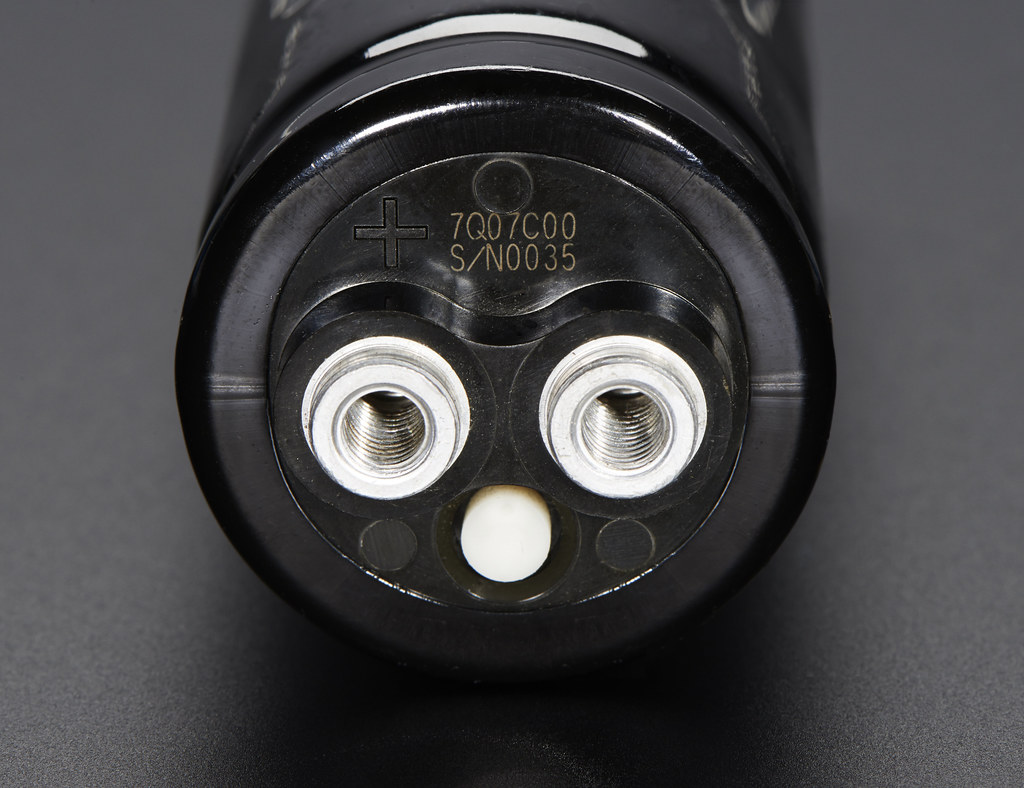
image by Adafruit

By now you have probably hear about supercapacitors and: an alternative to batteries, with ultra short charge times and high output-power peaks.Be assured that this is true, and that you can already buy supercapacitors for a relatively low price. 

However, supercapacitors are usually misunderstood, as they do not substitute batteries but offer a functionality for which most applications used to resort to them: short term (i.e. less than 1 minute) power  storage. Also, do not confuse supercapacitors with graphene-based ultracapacitors, which do in fact have the potential to make chemical batteries obsolete.

In this post I will cover the main differences between supercapacitors and batteries (e.g. lead-acid and LiPo/LiIon batteries), and show you a quick equivalence formula to compute how big a supercapacitor must be to replace a given battery.


Electronics tutorial: equivalent parallel resistor

http://yalneb.blogspot.com/2015/08/electronics-tutorial-equivalent-parallel.html

Resistors, as their name suggests, offer resistance to the pass of current through them. They are also the most basic electronic passive component.

You can connect several resistors one after another in series, or connect them in parallel. In this post we will study the effect of the parallel configuration and calculate the current and voltage drop using Ohm's law.

Electronics tutorial: equivalent series resistor

http://yalneb.blogspot.com/2015/08/electronics-tutorial-equivalent-series.html

Resistors, as their name suggests, offer resistance to the pass of current through them. They are also the most basic electronic passive component.

You can connect several resistors one after another in series, or connect them in parallel. In this post we will study the effect of the series configuration and calculate the current and voltage drop using Ohm's law.

Electronics tutorial: an intuitive idea of what voltage is


http://yalneb.blogspot.com/2015/08/electronics-tutorial-voltage.html

This time I am going to talk about voltage, trying to give the most intuitive intuitive interpretation possible: potential difference.

Actually, voltage is the potential difference between two points in an electric field per unit of charge. Does this sound familiar? Here is a clue: cinematic potential energy is the potential difference between two points of a gravitational field per unit of mass.

Electronics tutorial: basics and Ohm's law

This is the first post about a series of mini basic-electronics tutorials I intend to write. Many of my friends, some engineers, some not, are starting to play around with Arduinos and other microcontrollers; and although they are doing quite well with the programming part, they still struggle to understand why you have to connect everything to ground, what a pull-up resistor is or how Pulse Width Modulation (PWM) works. But first we have to start with the basics.

In this post I am going to talk about voltage, current, resistors and Ohm's law.